Writing worship music for the Indian urban audience

By Torie Speicher

INDIA — Seven months ago, Kiri Dutta* left her lucrative and fulfilling job in the corporate world to support her husband in ministry. It wasn’t an easy transition, but now God is using her to disciple urban young people in an Indian mega-city.

A lot of these young people are students, or recent graduates like Indra Sethi.* Sethi recently graduated from university with a Bachelor’s degree in engineering, one of the more rigorous and competitive degrees for Indians. He wants to serve God in the marketplace.

Sethi accidentally ended up at the songwriting workshop sponsored by Dutta and her husband Mani.* Even though he found out about it only the night before, Sethi knows it was God’s plan for him to be there.

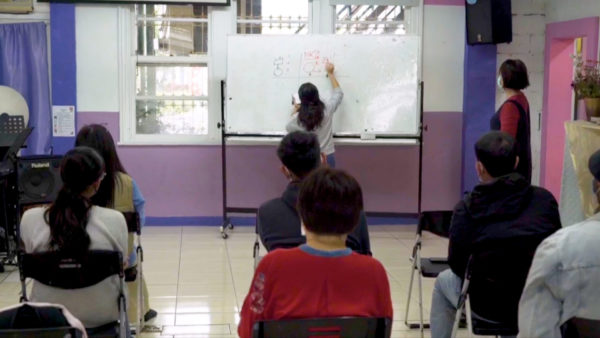
Attendees of the Song Writer's Workshop practice their new song

The purpose of the workshop, organized by Mani and Ethan Leyton,* an ethnomusicologist (or someone who studies the cultural and social aspects of music), was to lead these young people in writing songs for worship.

“I think the most important thing that people can take away from a conference is that they have a voice,” Leyton said.

“We want to offer workshops on songwriting because music doesn’t just happen and God’s word tells us to sing new songs to Him,” Leyton said. This is one of 20 workshops Leyton has organized in the last seven years for believers around South Asia.

“Many South Asian languages (and worldwide) don’t have a single song about Jesus in them,” Leyton said. “It takes time and concentrated energy to come up with songs that are understandable, biblically accurate and culturally relevant for people.”

This workshop is unique because it was in English. The students that Kiri and Mani work with speak many different native languages or mother tongues, but because they’ve been educated in English, they are more comfortable communicating in English than their mother tongues.

Leyton hopes the songwriters will take what they learn and apply it to their mother tongues.

Sethi, along with 17 other budding songwriters, collaborated with a small group to write a song before the weekend ended. The workshop produced four songs that are now a part of worship for the church Mani started.

“The strongest songs come from co-writing,” said Jeff Bourque, the American musician who led the workshop. Bourque leads worship for Grace Community Church in Nashville, Tenn., but has been writing original songs for 22 years.

“Jeff Bourque was not the ego-driven man I was expecting to teach us songs,” Sethi said.

Instead, Sethi found Bourque down-to-earth and humble — albeit tall by Indian standards — and prepared to share the gifts God has given him.

Bourque asked all the groups to choose a passage of Scripture and pick a theme from it. The theme that Sethi’s group settled on was wanting people to know that Christianity is not only a religion, but a relationship.

“According to Indian traditions and religious views, people need to sacrifice things (for salvation),” Sethi said. “I wanted people to know about the true God who is alive, who gave His Son as a sacrifice and a ransom for all our sins [meaning] there is no need for any sacrifices.”

Since two people from Sethi’s group had to leave the workshop early, Bourque joined their group. Together, they wrote This is not Tradition.

“Even though I helped write the song, the group wasn’t looking at me and saying it was a great song, they were looking at him and giving him all the affirmation. They said, ‘We want to hear it again!,’ “ Bourque said.

Bourque was happy that the song impacted people, but not just because he helped write it. As a teacher, he was proud of Sethi for taking the concepts he learned and using them to encourage worship of the one, true God.

Bourque came to India to lead a workshop on songwriting and was impressed with the quality of musicians and their hunger to learn and practice songwriting.

Even though Sethi has written songs before, they were more personal songs with his secular band. Worship songs are different because they are written to express to God what we feel about Him.

“I feel that a person who has been smothered by the love of God writes a worship song to pour out or express his heart in words,” Sethi said.

Sethi said the pleasures of the world cannot compare to the joy from intimate worship of God.

“Once we go to heaven, the only thing we’ll be doing is worshipping our God,” Sethi said. “So, what I’m doing here is I’m actually practicing.”

When Kiri talks about the song Sethi wrote and how people in her church love it, she won’t stop there. She’s ready for the next workshop and the next batch of songs that will build up the church among Indian young people.

—30—
*Name changed.

Torie Speicher is a writer serving among South Asian peoples. To hear This is not Tradition and the other songs from the workshop, use this link: http://southasianpeoples.imb.org/?p=6152.

Week of March 4, 2012

March 4 : Gathering for a Purpose.  The teams from southern and central India will be joining together early this month for a joint meeting. Please pray that this meeting will encourage these cross-cultural workers to continue pursuing their vision of seeing all the peoples of their area have the opportunity to hear the Gospel and experience healthy, reproducing churches. Pray for them as they travel to and from the meeting, and petition for safety and no complications. Pray for the volunteers as they lead everyone in worship and a study of God’s Word, and for those taking care of the children. Pray that everyone at the meeting will hear a fresh, specific word from God, and that the teams will advance God’s kingdom even further into the neighborhoods, villages and cities of India.

March 5 : Picnic Time. Thank you for praying for the January 11 picnic for the Bihari Muslim children. More than 60 children had a wonderful time out in the countryside, playing in a grassy field, seeing farm animals, enjoying relay games, and eating a wonderful meal. Praise God for the Vacation Bible School in Missouri that made this special time possible through their financial gifts and for a group of volunteers from Tennessee who entertained the children at the picnic. A cross-cultural worker writes: “City children don’t get these opportunities often, especially those from poor families who cannot afford to travel. The kids all clamored for attention from all of us. . . . It was obvious that some of these kids had been beaten or were unhealthy, but for one afternoon, they were just kids. Pray that these Bihari children will learn how precious they are in God’s sight. Pray that God will rescue them from their path of destruction and lead them to Himself. Pray for those who work to teach and guide them. Pray that God will give them patience and wisdom each day.” Through this children’s ministry, God is indeed working in the hearts of Bihari Muslims in Bangladesh. Praise Him! BihariBride@pobox.com

March 6 : Help in Remote Areas. This month, a medical team arrives to help meet medical needs in a very remote area of Nepal. This team could fulfill some great needs of the Chitwan Tharu in a place where there are no doctors and no clinics. Please pray for the medical and spiritual success of this trip. Pray that the Gospel will be shared clearly and that many will be healed both spiritually and physically.

March 7 : Kaleidoscope of Colors.  Hindus and South Asians from many backgrounds are busy this week purchasing packets of colored powders and water cannons in anticipation of celebrating Holi on Thursday, March 8. Also known as the Festival of Colors, celebrants throw the powders and water on each other, resulting in a display of walking kaleidoscopes. Even though most South Asians do not know the origins of the festival and believe it is simply a celebration of unity and brotherhood, Holi is actually based on several events related to jealousy between Hindu deities, and is also a time to seek the blessings of Hindu gods for fertile lands and harvests. Pray that South Asian Hindus will realize that God, the One and only, is jealous for them to know Him and worship Him. Pray for opportunities to share about Jesus, whether on the streets in the midst of the rainbow showers or in the quiet of homes where families have gathered for their own celebrations. Pray that many South Asian Hindus will discover the salvation that brings incomparable brotherhood and unity in the body of Christ.

March 8 : Perfume of Ratnagiri. In the Deccani Muslim area is the coastal city of Ratnagiri, an historic fishing town of approximately 100,000 people. According to the local confirmed data, there are less than 1,000 Christians living there. In 2011, they faced opposition to sharing the Gospel. The churches are growing, though slowly, yet the Muslim communities remain virtually unengaged with the Gospel. There are many Muslims from other parts of India living there, while the older, more dominant Muslim community controls the fishing industry. Local believers have coined the phrase, ‘the perfume of Ratnagiri,’ referring to the evening smell of drying (or rotting) fish! Please pray that the body of Christ will catch the Lord’s vision and love for the Muslims in this city. Pray that the Lord Jesus Christ will have His way in the hearts and minds of the Muslim community. Pray for the dissemination of the Gospel message, asking that where historic opposition exists, God will pave the way for transformed lives.

March 9 : Stories on Our Hands. “We like the stories and can remember them because they are on our hands,” says one woman at the henna party. A national woman partner, K, gathers a small group of her neighbors and has a henna party. A young girl draws the henna design on the women’s hands while K tells the Creation story. The sun, moon, stars and waves make beautiful henna designs while teaching truths from the Word. These majority women are asking many questions about the Truth. Please pray that God will open their spiritual eyes to see Him and understand who He is. Pray for K as she is sharing and visiting with these women regularly, asking that her words will be His words and bring healing, salvation, freedom and peace. These women are precious in God’s sight and He desires “to bestow on them a crown of beauty instead of ashes, the oil of gladness instead of mourning, and a garment of praise instead of a spirit of despair” (Isaiah 61:3, NIV). Oh, that they may know the salvation and freedom in Christ!

March 10 : Victory! Rejoice with cross-cultural workers who write, “We would be remiss if we didn’t share many of the victories we have seen the Lord deliver in the past few months while we have been gone. One of our national partners was able to see the first man in a remote village in Bhutan come to faith in Christ. Another national partner started two new fellowships inside Bhutan. A young man, who has been a believer for only 2 years, left his family and home and moved to another area where he has started 4 new churches. God is at work, and your prayers are casting darkness out for light!” Rejoice in these “new births.” Pray that these new Bhutanese believers would grow in faith and knowledge of the Word of God and share His love with their families, neighbors and friends. Pray that many indigenous Bhutanese churches would “spring forth” in 2012.


Musician Jeff Bourque equips Indian believers to write worship music

By Torie Speicher

INDIA — From Music City, USA, musician and songwriter Jeff Bourque made his way to India to share the basics of songwriting for a congregation with Indian believers. The mission: write songs.

Through a friend of a friend, Bourque was chosen by Ethan Leyton,* ethnomusicologist, and Mani Dutta,* an Indian pastor, to lead a workshop for 18 young men and women living in urban India and representing five churches.

“Dutta and I dreamed and prayed that instead of [English-speaking] Indian believers singing Hillsong and Chris Tomlin songs all the time, perhaps they could begin writing their own English songs for worship,” Leyton said.

Budding songwriters worked together to write a song that centers around God's character. Jeff Bourque, songwriter and worship leader, offered some one-on-one tips during small group time.

Roughly one out of every 70 persons in India believes in Jesus. Indian Christians are surrounded by temples full of idols and sounds like the cacophony of Muslim calls to prayer. With a unique perspective on their identity as Christians and living out their faith, these believers have a lot to offer Christian music.

In the last seven years, Leyton has organized 20 songwriting workshops for believers around South Asia. This one is unique because it’s the first one in English. In a diverse city of over 8 million people where four primary mother tongue languages are used, many Christians and young professionals are more comfortable communicating in English because it’s the language they have in common.

Leyton hopes the songwriters will take what they learn and apply it to their mother tongues, but also that these songs will be used in American churches one day.

As worship leader for Grace Community Church in Nashville, Tenn., Bourque thinks a lot about songs sung congregationally. When leading worship, he chooses songs that express the truth about who God is and what our response should be as His people.

Amit Dhawan* is studying in Bible college and serves at Dutta’s church. He has struggled to write songs before, but learned a lot at the workshop. He worked with a group of four people to write the song The Lord is Good.

“Many times I came to know the truth about God through worship songs and it encouraged me to come closer to God,” Dhawan said. “(As a songwriter), I want people to understand that God still saves, heals and delivers people from darkness.”

Like Dhawan, these budding songwriters had some experience writing songs, but almost no experience writing songs centered on God for the purpose of building up the church. Among the students were a former drug addict, an engineering student, a banker, a software developer, a pastor and the grandson of a village elder who practices witchcraft.

With 22 years of songwriting experience and a passion for the local church, Bourque’s interest in leading a workshop like this was peaked in 2005. He was leading worship overseas for a group of cross-cultural workers and heard about the importance of equipping new believers in different cultures to communicate their experience with God through song.

“When you have an experience of salvation, everyone is saved to Christ, but everyone is saved from something and that looks different,“ Bourque said. “So, the people of this country will have a completely different perspective on what it means to be a believer.”

A group of four Indians with different mother tongue languages collaborated in English to write a song about our relational God.

Bourque believes that believers from different cultures should be able to sing songs that relate to their experiences, rather than importing songs from other cultures, like the Western-sounding songs sung in American churches.

When he came to India, Bourque was expecting to offer tools that people could use to get started and hoped that with time and experience, they would learn to write lasting songs.

Instead, what he found was talented musicians hungry for the opportunity to learn and practice songwriting.

The language barrier — although minimal since the workshop was in English — was there, but it didn’t stop Bourque from connecting easily with the students from Bhutan, India and Africa.

As surprised as he was that it didn’t take long to build trust, Bourque credits their bond with knowing that their lives have been greatly impacted by Jesus. They were ready to soak in everything he had to share with them.

“I mean, it was two straight days of thinking of nothing but songs and songwriting and I started to get fatigued,” Bourque said. “But rather than taking a break, the students said, ‘Let’s write another song!’”

Sanjeet Devar* leads worship at another church in the city. He worked with a group of four to write the song You’re My Friend. Inspired by John 15:13-15, he wants his song to express God’s nature as our approachable friend.

“He created everything that we see and know and chooses to call us His friend,” Devar said. “God is nearer and more approachable than what most people in my culture think.”

Despite their different backgrounds, Bourque and the 18 young men and women living in urban India worshiped God together through familiar songs as well as songs they wrote.

By the end of the workshop, Bourque’s students had written four songs ready to use in the church context. “Their excitement to write songs motivated me to write more,” Bourque said. To hear them, use this link: http://southasianpeoples.imb.org/?p=6152.

The last night of the workshop ended with a time of worship. Together, the pastor, former drug addict and Hindu background believer jammed together singing songs they wrote with faith in Christ as their bond. No one noticed the myriad of mosquitoes or flickering electricity as they praised the one, true God with voices, shakers, djembe, guitar and keyboard.

“I looked around the circle as we were worshipping one night just playing guitars and banging on instruments and singing songs and their hearts were so humble and filled with love that came from an understanding of who God is and a desire to know more (of Him),” Bourque said. “They were just obviously committed followers of Christ, without any pretense or shells, and that was such a blessing for me to spend time with them. “

Bourque’s prayer is that seeds of Truth taken from God’s word in these songs will bear fruit in the church in India.

—30—
*Name changed.

Torie Speicher is a writer, serving among South Asian peoples. Jeff Bourque can be found online at http://congregationalsongs.com/

Worship Music (written by South Asians)

These songs were originally written at a songwriting workshop for believers in India. The hope is that those believers who attended will go on to write songs from their experience and perspective, encouraging other churches.

Listen. Be encouraged. And, worship our great God.

The Lord is Good: This song is a joyful celebration of God’s goodness.

This is Not Tradition: This song explains that Christianity is more than a religion of rituals.

Your Grace: This song explores the freedom from sin and shame, found in God’s grace.

You’re My Friend: This song explores the close relationship to God we are given through Christ.

Musician Troy Akers makes sure music doesn’t overshadow the Gospel in India

By Torie Speicher

INDIA — Playing keys for the band The CO, Troy Akers is comfortable in the spotlight. At first glance, the 26-year old Nashville native smiles easily and looks trendy in fitted T-shirts and jeans that cover his seven tattoos. And, his hair gets a little crazy sometimes.

Musician Troy Akers plays keys for the band The Co and has a heart for the people of India. Used by permission. Photo credit: Jon Karr.

Akers’ band of seven years was recently named ABC Family Channel’s “Artist on the Rise” and is at work on a second album. What you can’t see from his physical appearance, but you will hear at a concert, is his heart for the people of India to be changed by the hope of the Gospel.

“I came to India because I have always been intrigued with the country and its people and how open their hearts are; how barren it can be,” Akers said, “So, when my youth leader from high school moved to India for Christian work, all I had to do was buy my tickets. I was there.”

On a scooter, running away from a storm barreling down mountain streets made of stone and loose dirt, Akers, then 19, fell in love with India. Now, he has been four times. “That first trip showed me how my life lacked the simple trusting of our Father,” Akers said. “The more I go, the more I see the need for the Gospel and for others to realize the immediacy there is for Truth to reach India.”

His travels have taken him all over the subcontinent, but in North India, there’s a taxi driver who calls him “Bro.” Santosh Patel* loves Akers. The CO’s music isn’t the Hindi music he’s used to hearing, but Patel’s happy to know that his brother in Christ is doing well.

“Santosh and I struck a friendship right off the bat on my first visit to India,” Akers said. “We have the same sense of humor.”

On his most recent visit, Akers toured schools in India, working with an organization that ministers to the Dalit (or untouchables), the largest people group of India. Their vision is to bring freedom to the Dalit through Christ’s love — a freedom that is not found in the culture. They fight for their freedom by educating them and rescuing them from sexual trafficking and slavery.

Akers teams up with an organization that ministers to the Dalit to bring them freedom through Christ's love.

As an American musician, Akers was greeted warmly among classrooms and church services. But something was missing.

Since India sometimes looks to the West for pop culture, it can become a popularity contest. “As a musician, coming to India to just play seemed to actually get in the way of the Gospel even though that wasn’t my intent,” Akers said. “So figuring out a way for that to just be a part of what my purpose is while in India is still coming to me.”

Akers finds concerts in the States to be completely the opposite. Since Americans aren’t easily accessible, music is an open door. “Fortunately, music is universal, and folks are more likely to listen initially. Once you have them listening, the hope is that they will be more willing to hear you out,” Akers said.

Earlier trips to India were different. He came as a Christian who wanted to share the Good News. Coming as a musician who happens to be a Christian made it more challenging to stay focused.

“I didn’t directly share the Gospel through conversations, but realized that many Indians view Americans and even more, American Christians, as people who do not want to go deeper than their own religious experience,” Akers said.

“As I began to see the needs around me, I could see a clear need for people who cared more about who they were reaching than themselves. Pride is deadly.”

At one church, Akers sang My Eyes are Dry — an old Keith Green song — to a few hundred Indian Christians because he thought they needed to hear it.

“I felt the words from this hymn were a vessel to me and the congregation, reminding us to reach out, to not let our faith run stagnant,” Akers said. “Like the song says, ‘our eyes can get dry, our faith can get old, our heart can get hard.’ And, while we may know exactly what we need to do, if we do not turn to Christ relentlessly we can shrivel up. Easily and deadly.”

Even in a developing country where the needs are so obvious, Akers warns that the enemy can make us lazy if we let him. “We must remember that the main focus of everything we do has to be giving Truth to the lost. Whether in America or India, we can become complacent.”

God brought Akers to India because it is a part of his calling, but Akers would say it’s a calling for all believers — to love the unloved and reach those who seem unreachable.
—30—

*Name changed.

Torie Speicher is a writer serving among South Asian peoples. Troy Akers is a musician who tours with the band, The CO. The CO can be found online at thecomusic.com.

Week of February 26, 2012

February 26 : Expanding Their Efforts. “Pray for two pastors doing Training for Trainers (T4T) in one western Indian state. Ask God to direct them to the areas where He is ready to work. Pray that they will keep good records and hold others accountable so we can effectively follow up on what God is doing in those areas. Ask God to call and equip many others to do T4T trainings. Continue to pray for the all the trainings, asking that we will see the arm of God as the Word says: ‘The LORD has bared his holy arm before the eyes of all the nations, and all the ends of the earth shall see the salvation of our God’ (Isaiah 52:10).” http://prayforgujarat.wordpress.com/

February 27 : Ganak Communities. This month, ask God to raise up more believers among the Ganak. There are very few known believers among them, and no churches at all among the largest portion of the Ganak population in lower Assam. Pray that those who have left their village communities to pursue education, jobs and other opportunities in bigger cities will maintain connection with their family members and friends who remain in darkness. Ask God to reveal Himself in dreams and visions to more than 100,000 Ganak who are enslaved to the worship of idols. Ganaks are also entrenched in the practice of astrology; they consult the positions of the planets, moon and stars to determine their future and important decisions such as marriage and careers. When there is a problem in life, they also turn to astrology for a remedy. Pray that God will help them to see the deceptiveness of the practice of astrology and realize that only the one true God can determine their future and is the only true remedy for the troubles of life.


February 28 : Changed Lives. J has started a group in the city that is seeing a lot of fruit. One mother spoke with J and said that her son is now a different person than he was before and asked why she and others in her family hadn’t been invited to their fellowship. Even his wife has come to faith. At this time, none of the people who have accepted Christ have been baptized, so pray that they will be obedient and give an outward testimony of their faith through baptism.

February 29 : Battle Through Fear. As more urban believers from different walks of life join in the work of discipleship and church planting in Mumbai, the resistance is also growing. Many are facing resistance from their families. Others are feeling an internal struggle. Please pray that the Father will break the chains of fear and that His spirit of joy will overwhelm those who are persecuted. Pray for these believers to be bold despite their fear.

March 1 : Breakthroughs in Nepal. Please pray that March will hold many breakthroughs and successes as Nepali nationals are accountable to go and share their story of salvation with others. Pray that they will be obedient and diligent in sharing with others and in discipling new believers to be obedient also in sharing.

March 2 : How Many Will Hear? “In looking back over the past year, we could see that not nearly enough Muslims in our state had an opportunity to hear about Jesus and make a personal decision to follow Him. Please pray that God will give us creative ideas for mass seed-sowing projects. Pray specifically for more believers who will learn how to share the Gospel with Muslims around them. We are considering one such project for Easter. This month we will begin working on the logistics and permissions needed for that to happen. Please pray for open doors and a quick response from those in authority who might oppose the project. Continue praying for Muslims who have shown an interest in knowing more about Jesus. Ask God to make the soil of their hearts fertile. Pray that the seeds will take root and produce a plentiful harvest for the kingdom.”

March 3 : Lifting One Another. “Give thanks to God that Muslim-background believers have recently organized a weekly prayer session to pray specifically for Muslims. This could be the beginning of a core group that develops a unified vision for the work in this state. Currently the prayer times are not very focused. Ask God to give each person a burden to pray for the Muslims in our state. Pray that He will lead us in how to intercede for Muslims and use that to guide us in reaching them.”

A couple in South Asia use art to reach Hindus

By Kate Taylor

SOUTH ASIA — Pete, and his wife Diane Bradee,* take their calling to live cross-culturally seriously. They are committed to communicating Jesus in a way that people in South Asia will better understand.

Repentance and faith are all that is necessary, Pete said. It should be, “Jesus period, not Jesus plus.”

Instead of forcing traditional methods of sharing the Good News to work in a unique culture, the Bradees use art and creative expression to share Christ with Hindus in a large city in North India. Music, dance, painting, poetry and storytelling are intrinsic to the culture of Hindus from high castes.

Pete and Diane Bradee have collaborated with local artists on music projects that use Indian song styles and local instruments to tell God’s truth in the Hindi language.

Hindu society observes a caste system, which segments the population into a multitude of separate social groupings that are determined by one’s birth.

“(Art is) a part of who they are,” Pete said of the high caste Hindus. “It gives you an avenue to say all you want about Jesus, because (the message is) coming in the right package.”

The Bradees use a variety of art forms — painting and poetry, music and dance — to relate Biblical stories and God’s truths. They see art as one culturally appropriate package that is used to wrap the gift of God’s word.

Because Hinduism and Christianity in India are not only religions, but also legal, political and social lifestyles, high caste Hindus have been resistant to traditional methods of sharing Christ with them. Christianity has been closely associated with foreign culture since the British colonial period in India. The Bradees desire to illuminate the truth of Christ separate from any loaded political idea or cultural misrepresentation.

“We (as followers of Christ) are supposed to be the ones who adapt,” Pete said.

Hindus should not have to completely abandon their culture in order to follow Christ, but should be equipped within their own cultural framework, he added.

An ancient Indian lyrical poem says:
Lead me out of what is not true into the truth;
Lead me out of the darkness into the light;
Lead me out of death into eternal life.

Of the poem, Pete said, “This Indian cry to God for the assurance of eternal life is the right longing, but it is only answered in our Lord Jesus Christ who is the truth, who is the light, who is the only source of eternal life.”

The Bradees have been heavily involved in creating a book of 24 stories of Jesus, written in an Indian poetry form and illustrated in a popular modern symbolic art style.

They have collaborated with local artists on music projects that use Indian song styles and local instruments to tell God’s truth in the Hindi language. Indian-style interpretive dances help enhance understanding of the songs.

Every form of art, down to the smallest decoration in their home, is a way for the Bradees to share Christ’s light in a dark place. Pete said it is their desire to use familiar art forms to share an unfamiliar faith. They do not change the message of Christ, but simply repackage it to increase understanding of the Gospel for a specific culture.

“Jesus is for you, no matter what community you were born into,” Pete said.

After leading people to faith in Christ, Pete said, they encourage them to stand for Jesus in their families and their communities. By reaching people where they are, and encouraging them to stay and share Christ where they are, they hope to see a whole community move toward Christ.

“Go back to your people group, to your family and you be salt and light there and tell them what God has done for you,” Pete said.

-30-

*Name changed.

Kate Taylor is a student at Union University who recently spent six weeks in South Asia.

Week of February 19, 2012

February 19 : Nayinda of India. “This month, we are asking you to pray for the Nayinda people of southern India. There are more than 200,000 Nayinda in Karnataka, with no known evangelical involvement among them. They are a poor people, which usually makes it easier for them to recognize their need for a Savior, but even so, we still do not know of any Christians among them. They also tend to be concentrated in one location, the Dakshina district of Karnataka. They speak a lesser-known language, Tulu, which isolates them from others even more! Traditionally they are barbers. In recent times, they have been moving into urban areas to seek jobs as barbers, as well as day laborer jobs. Pray that as they come to the cities, they will be able to hear the Gospel in a language they can understand and take it back to their families.” http://prayerthreads.imb.org


February 20 : Embracing the UUPGs. The task of reaching all the unengaged unreached people groups (UUPGs) of mid-southern India seems insurmountable, but God knows how it can be done! We are beginning to see one of the ways God is accomplishing this purpose of His: through the ‘embracing’ of UUPGs by churches. As we shared earlier, we are praising God that 12 of our UUPGs were embraced by churches in the United States. He has been answering your prayers that these people would be able to involve others in their churches in praying for these UUPGs. Praise God, we now have some who want to be involved through volunteer teams and beyond. We ask you to pray for our leadership to have the wisdom to know how to facilitate these churches beginning to have an impact on these people groups.” http://prayerthreads.imb.org

February 21 : Sing for the Nations. Please claim the song in Revelation 15:2b-4 with the authority of Jesus Christ, and sing it in the power of the Holy Spirit for every nation (people group) represented in Karachi. In this city of millions, there are multiple languages heard: Urdu, Pushto, Balochi, Sindhi, Bengali, Brahui, Shina, Hindko, Gujarati, Memoni, Balti, Pohari, Gujar, Arabic, English and more. The promise from God is that all nations will come and worship before Him. Pray for the people in Karachi to be among those kneeling before His throne, praising the King of kings, Jesus Christ. Intercede for believers in Jesus and for those who work in the harvest fields to be focused on Jesus and keep their eyes open to see where He is working and join Him. Pray that they will go forward in boldness and wisdom. Ask that the evil one, Satan, will be bound in chains now! Plead for the people of Karachi to have open ears and hearts, ready to listen to the Gospel message and receive it, and then share it with others.

February 22 : Heart Language Makes Difference. Praise God that the Book of Luke translated into Assamese Muslimani has been printed and is being distributed! This is the first book of the Bible to be printed in the heart language of the Assamese Muslims. Thank the Lord for individuals who have translated the book and worked on the details of the publishing. Intercede for the Muslim-background believers and Muslims who will be receiving the Book of Luke in a language they can understand. Ask that those who have yet to believe will accept Jesus Christ as their Savior. Pray for each Muslim who receives a book, asking that he/she will be bold and read it, and that his/her heart will be open to Jesus Christ. God can break down barriers in any heart. The Word of God is living and active!

February 23 : Community Radio. Please pray for an Indian Christian man, a Bihari Muslim-background believer, who has the “new assignment” of setting up community radio in one area of Bihar state. This past summer, he attended a training session to learn how to do this. Ask that he will now be able to apply what he has learned for the sake of Biharis who need the Lord. Our brother writes: “Please pray that God (will) give me wisdom and strength that I can be able to perform well. . . . Pray that God (will) make me an instrument for His kingdom (so) that I can be able to share His love and compassion among the people.” Pray that many will hear the Gospel through this new program and will place their faith in Isa (Jesus). Thank you for being a part of this new ministry through prayer. May the Lord be glorified. BihariBride@pobox.com

February 24 : Reaching Muslims. Thank you again for your prayers regarding a teaching course that a cross-cultural representative wrote on how to reach the Muslims of northern India with the Good News of Jesus. A new group of Bihari Christians are continuing to learn how to reach their Muslim neighbors with the Good News. Eleven are coming from throughout the state to attend the training. Please keep praying that these Christians will take what they are learning and use it to further the kingdom of God among Bihari Muslims. Approximately 17 million Bihari Muslims live in India, and about 12.5 million live in Bihar and Jharkhand states. Pray that the Good News will travel fast and change lives for eternity. BihariBride@pobox.com

February 25 : Responding to Truth. During the Christmas season, the “JESUS” film was broadcast on national television in the language of the Deccani Muslims. More than 100 Deccani Muslims responded via telephone text messages, asking for a copy of the film for themselves. They are from the Shaikh, Sayyed and Ansari peoples. The “JESUS” films were shipped to them in January. Pray that the films will be passed around, reaching multiple homes. Ask God to use these films to convict the Deccani Muslims of the truth of the good news that salvation has been provided through the sacrifice of the Lord Jesus Christ. Pray that those who oppose this message will be miraculously convicted of the truth, as the apostle Paul was, by direct intervention from our Lord. 

Islamic court in Kashmir targets Christians

Baptist Press, Jan 20, 2012: http://www.bpnews.net/BPnews.asp?ID=37008

NEW DELHI, India (BP) — Christian workers are fleeing India’s Kashmir Valley after a sharia (Islamic law) court rendered a “guilty verdict” against three Christian leaders and issued a fatwa against Christian schools in mid-December, according to a Jan. 20 Compass Direct News report. And a door-to-door campaign reportedly has been launched to bring converts back to Islam, according to Compass.

The court, which has no legal authority, issued guilty rulings of “luring the valley Muslims to Christianity” against pastor Chander Mani Khanna of All Saints Church in Srinagar in northern India’s Jammu and Kashmir state, Dutch Catholic missionary Jim Borst and Christian worker Gayoor Messah, The Times of India daily newspaper reported.

The three had already left the region apparently due to rising tensions.

The sharia court, headed by Kashmir Grand Mufti Bashir-ud-din Ahmad, also “directed” the state government to take over the management of all Christian schools in the region, The Times added in its Dec. 19 report.

“I fled with my wife and children, as I was not feeling safe in Srinagar,” a Christian worker from Kashmir told Compass on condition of anonymity. “A group of Muslims visited my house twice, threatening my parents with a social boycott if they failed to produce me.”

The source said he and some of his friends left Srinagar — one of the largest cities in India not to have a Hindu majority — a few days before the sharia court ordered three Christian workers to leave Kashmir Valley, located in the Muslim-majority region of the state.

Another source told Compass that some men had visited his family and those of his friends in Srinagar asking for their whereabouts.

“They had the names of all my local Christian friends when they came to my parents’ house, and they asked for the names of more Christians in the area,” the source recounted. “Muslim men are going to every believer’s home and asking their families to ensure that their children return to Islam. They are using Islamic scriptures to persuade the families, warning that if their members do not reconvert their households will face ostracism.”

The source added that those who have fled may not be able to return to their homes for at least a year.

“We have our family with children — where should we send our kids to school?” he said. “Where should we stay? We don’t have any answers.”

The men who are visiting Christians’ homes are sent from the many committees that the sharia court has formed to prevent conversions, the source said. The mufti could not be contacted for comment.

Separately, well-known Muslim clergyman Mirwaiz Umar Farooq has launched a website, www.tahafuzeiman.org, titled “Council for Protection of Faith,” for a committee formed in November 2011, “after numerous cases of apostasy came into light” and “to thwart nefarious designs of pervasive forces and the deep-rooted conspiracy of making youth apostate and defectors by giving them concessions and benefits secretly.”

Besides the “guilty verdict” against Khanna, Borst and Messa, mufti deputy Nasir-ul-Islam reportedly said an investigation against Parvez Samuel Kaul, principal of a local Christian missionary school, is underway.

The court also ordered all Christian schools to teach Islam and other faiths.

“Given the Muslim majority character of the valley, the Muslim students should be taught Islam, and daily prayer written by Syed Mohammad Iqbal should also be sung in the morning prayers,” Nasir-ul-Islam told The Times of India.

Muslim leaders began to rally against Christians after a video posted on YouTube last October showed Muslim youth being baptized at the All Saints Church. Soon thereafter, the sharia court “summoned” Khanna to explain why Muslim youth were converted and whether they were offered money.

State police arrested Khanna on Nov. 19 on charges of hurting religious sentiments of Muslims by “converting” their youth. He was released on bail Dec. 1. The court later summoned Borst, but he asked the mufti to meet him at his church site. The mufti declined. The court found Christian worker Messah “guilty” because he was also seen with Khanna in the video.

The All India Christian Council warned that the sharia court’s verdict could encourage extremist elements to indulge in violence.

“The church does not accept as genuine any conversion brought about by fraud or force,” John Dayal, the group’s secretary general, said in a statement.

Dayal pointed out that a fact-finding team that went to Srinagar late last year found no evidence of force or fraud in baptisms. “Each baptism has been proven to be voluntary.”

There are only about 400 Christians in the Kashmir region, with 300 of them living in Srinagar, according to the fact-finding team.

The council also said the Christian community does not accept the jurisdiction of the sharia courts anywhere in India.

The sharia court was careful in its “verdict,” one of the area sources observed, noting that the three who were ordered to leave are not permanent residents of Kashmir.

The source also questioned the fatwa against Christian schools. “The court issued a fatwa against Christian schools because some business-minded Muslims want greater control over these schools, which are known for providing quality education,” he said.

Local residents saw an element of politics behind the tensions. The fact-finding team, which visited Kashmir from Nov. 29 to Dec. 2, learned from local people that some extremist groups and other vested interests had been seeking to use the issue of conversion in their confrontation with the state government, political parties and moderate Islamic groups.

They were “looking to score political points against each other, and any excuse was good enough to foment trouble,” one resident said. The state government apparently sided with the extremists to preempt any unrest, local residents told the fact-finding team.

While most Muslims in Kashmir are peaceful adherents of Sufi Islam, some are influenced by Wahhabism extremism.
–30–
Vishal Arora, based in New Delhi, writes for Compass Direct News (www.compassdirect.org). Based in Santa Ana, Calif., Compass focuses on Christians worldwide who are persecuted for their faith. Used by permission. www.bpnews.net

Chinese disciple South Asian church

By Shiloh Lane

SOUTH ASIA — In a conference center in South Asia, a small group of believers watches tears fill a woman’s eyes. She stands before them in a tunic and baggy pants—their own traditional clothing—and her voice quivers when she speaks.

“You can pastor yourselves without foreigners,” she says. “You can evangelize.”

Although Huan Tan* resembles her listeners, she must use an interpreter to encourage them in their spiritual growth. Through the voice of another, she speaks with conviction. She tells the people in jeans, khakis, polos, and button-up shirts that they can live lives mature in faith and spread the Gospel to their friends and families. Asians, she says, can sustain a successful church and spread the message of Christ. She has seen it happen.

She looks at the handful of people sitting in desk chairs. Tan and her husband, Pastor Feng Tan,* met the group this morning. They don’t share the same heritage or the same language with their listeners, but God led them across the Asian continent to share their spiritual knowledge with this tiny band of inexperienced Christians.

The Tans traveled from their home in Southeast Asia with five other members of their Chinese church. The group encourages spiritual growth by teaching leadership and discipleship at three locations in South Asia. In this cement room, Tan feels her country’s Christian history might inspire her listeners more than her prepared lesson. She wants them to know how God matured her own family of Southeast Asian believers.

Taking Action

Thirty years ago, Tan says, the Asian Christians in her country struggled. The government deported all of the American missionaries who had discipled them, leaving a leadership gap in congregations and seminaries. However, as time passed, the local believers took action. They appointed and trained their own pastors and carried on their own evangelism. With the help of God, the church flourished.

“We feel for you because we know that you may face a situation where you may not have outside help,” Tan tells her listeners. “You will be alone. Do not think God has abandoned you. He will be there for you because He has been there for [us].”

This scenario of success, Tan says, could happen in South Asia. With a voice full of emotion, she warns the gathering that their government could also deport foreign workers. But, Tan comforts them, God can prepare the South Asian church to grow on its own.

Tan’s story illustrates one of the reasons why American Christian worker Burt Galvin* helped orchestrate the Tans’ leadership training and their extensive travel from Southeast Asia to this white room. He recognized a connection between Asian peoples that foreigners cannot replicate.

Asian Connection

Galvin started planning the trip after meeting the Tans and their church members a year ago. At the time, he had just moved to their city after living among poverty-stricken communities in South Asia for 16 years. He saw their church’s passion for sharing the Gospel, and, when he learned that members ministered once a week to South Asian migrant workers near their homes, he offered to serve as a translator.

As Galvin sat on tile floors and negotiated language barriers between the Chinese church and their South Asian friends, he witnessed a change in the dynamics of the mission field. He saw the Asian church begin to take charge of spreading the Gospel.

“In some ways, I think the baton is being passed to the Asian church,” he says. “China is going to [produce] the next big wave of missionaries. … Not that Americans don’t have a place anymore—we have training, we have experience—but part of that needs to be to mobilize [the Asian] church to go.”

Shortly after he became a translator for the Tans’ church, Galvin suggested that the group visit the country their migrant friends call home to help facilitate their ministry to the workers. The church agreed, and seven people including the Tans soon committed to the mission.

Galvin saw an opportunity. This Chinese church in Southeast Asia, the Christian worker decided, had something South Asian believers definitely lacked—discipleship training. During the trip, the church members could not only experience South Asian culture, but they could also teach South Asian believers the basics of Christian belief and behavior.

“These new [South Asian] believers very quickly become leaders because there is a leadership void,” Galvin says. “They don’t feel confident. They aren’t exactly sure how to lead a house church, and so on. So, when they have more mature Christians come like these [Southeast Asians] who know how to do it well, it’s a big boost for them, and they need that kind of training to pass on to their people.”

Teaching Basics

Consequently, as the Tans conduct their leadership training, they realize that their audience has very little understanding of basic Christianity. The couple teach rudimentary lessons dealing with Christian marriage, Christian parenting and basic evangelism through Bible storytelling. The five other Chinese congregation members take turns giving their testimonies and demonstrating storytelling techniques with felt board characters.

However, toward the end of the seminar, as the South Asian believers ask their final questions, the Chinese Christians address a common ground all of their participant groups encounter: persecution. Coming from an environment where conversion means familial disownment, they understand this challenge like no Westerner could.

As well, Tan makes sure her listeners know she prays for them. She says, “I think that when a church or a people group is suffering, they need to know that others empathize with them—that there are other Christians in other parts of the world who have gone through and understand.”

These similarities make a difference to the believers in South Asia. Although the Chinese team wears nicer clothes and speaks a different language, at least one woman feels encouraged by their presence. After the training, she stops a Western worker to show her pleasure that the trainers look like her.

Galvin hopes that the South Asian believers will become inspired when they see other Asian people develop mature walks with Christ. He wants the South Asians to understand that they can train their own pastors, develop their own churches and devise strategies for sharing the Gospel.

The Tans and Galvin hope that the South Asian church will run powerful and effective ministries based on the example of their fellow Asian Christians.

Prayer Requests:

  • Pray for the work among Christians who have left the Islamic faith. Their families often ostracize them and their lives can become difficult and lonely.
  • Pray for the Asian Church to continue meeting the challenge and becoming the next great force in spreading the Gospel to the “ends of the earth.”
  • Pray for thousands of migrant workers all over the world to come to Christ, undergo discipleship and form churches before returning to share with others in their South Asian home countries.

—30—

Originally posted on AsiaStories.com. Used by permission.