Nepal Christians fight for burial rights

Nearly 200 graves face demolition.By Sudeshna Sarkar

By Sudeshna Sarkar

Compass Direct News, Jan. 1, 2011: www.compassdirect.org

KATHMANDU, Nepal, January 25 (Compass Direct News) – Three years after the death of a Christian who was a captain in the Nepal Army, his widow, Gamala Guide, faces fresh grief.

The grave of her husband, Narayan Guide, is threatened with destruction as authorities of Nepal’s most powerful Hindu temple are reclaiming the forested land where it is located.

“What kind of strange country is this that doesn’t allow its own citizens to rest in peace?” the 55-year-old recently asked leaders of the Christian community in Kathmandu. “Please do something to stop the desecration, or my husband will die a second death.”

At least 200 graves, many of them unmarked due to Christians’ fear of discovery and destruction, could share the same fate. The Pashupatinath Area Development Trust, the organization administering the Pashupatinath temple that dates back to the fourth century AD, has begun renovating the shrine as Nepal celebrates 2011 as its “tourism year” with the goal of attracting 1 million visitors. The temple has been declared a world heritage site by UNESCO.

“In the late 1980s, the government gave us 292 hectares of land to develop the Pashupatinath temple,” said Ram Saran Chimoria, director of the trust. “We have accordingly drawn up a five-year plan that will renovate the main shrine and beautify its surroundings. The forested land adjoining the temple will be used to grow plants considered sacred by Hindus.”

Chimoria said part of the forest is also meant to be used for Hindu burials.

Nearly 200 graves face demolition.

“A Hindu sect called the Dashnami, which has 10 sub-groups under it, buries its dead here, as Muslims and Christians do,” he said. “Since Pashupatinath is a Hindu temple, the 10 sub-groups are allowed to bury their dead here. But other communities also began burying their dead here, first pretending to be the Dashnami and then clandestinely. This is against Hindu traditions, and the temple is seeking to reclaim what belongs to it. It is the responsibility of the government to allot burial grounds to non-Hindus, not the trust’s.”

The burial ground lies opposite Arya Ghat, a cremation ground at Pashupatinath, where bodies are burned on pyres according to Hindu tradition. Known as the Sleshmantak Forest, it is a steep and nearly inaccessible wooded tract where monkeys and foxes roam. Locals advise visitors not to wander into the forest alone, even during day time, for fear of robbers.

“I attended several burial rites there,” said Chirendra Satyal, spokesman of the Catholic Assumption Church of Kathmandu Valley. “They were all low-key. Many of the graves are unmarked to avoid detection. The burial ground is used as a garbage dumping site, and at times foxes dig up the buried bodies. There are also cases of bodies being dumped on top of one another.”

An increasingly angry Christian community, tired of petitioning the government for an official burial ground, is now seeking stronger measures.

“Nepal became secular in 2006, and two years later, we petitioned the prime minister, the culture minister and the top human rights agency in Nepal, saying that in a secular democracy Christians should have the same rights as others and should be given their own burial ground,” said C.B. Gahatraj, general secretary of a Christian committee formed to provide recommendations to parliament, which is drafting a new constitution. “We understand the temple’s position. But the state should understand ours too.”

The committee had identified forested land on the outskirts of the Kathmandu Valley, in an area called Duwakot, and proposed that it be given to them.

“We would make it one of the most idyllic sites in Nepal,” said Gahatraj. “It would have gardens and would be an attractive destination for tourists as well. But so far, there has been no response from the state.”

Believing the time has come for stronger action, Christians plan to discuss the issue with 22 major parliamentary parties on Sunday (Jan. 30).

“At the meeting, we will present our case again,” Gahatraj said. “We also want the trust to suspend the demolition drive till we are given our own land. If there’s no result, we will internationalize our case by taking our problem to international rights organizations and the United Nations.”

As the first such public protest, on Feb. 15 at Maitighar Mandala, one of the most prominent areas of the capital, the Christian community will begin a “relay hunger strike.” Christians are also beginning the first-ever Christian census this year to ascertain their true position in society.

“We estimate there are about 2 million Christians now [out of a population of nearly 29 million],” Gahatraj said.

Catholics, however, form a tiny fraction of the Christian community. Satyal assessed there were about 7,500 Catholics. In 2009, three women were killed at the Assumption Church when a militant underground organization planted a bomb there. All three had to be cremated.

“Land is a premium commodity in Kathmandu Valley,” said Anthony Sharma, Nepal’s first Catholic bishop. “When the living don’t have land, it is futile to seek land for the dead. We have accepted cremation for Catholics in Nepal in keeping with acceptance worldwide.”

But even the cremation is dogged by discrimination.

“The Arya Ghat cremation ground at Pashupatinath distinguishes between upper castes and lower castes,” the bishop said. “If Christians are taken there, they would be treated as lower castes. So we have organized our own cremation site in Teku [in a different part of the town].”

Madhav Kumar Nepal, who resigned as prime minister on June 30 but leads a caretaker government, was regarded as having a soft spot for Christians. After the attack on the Assumption church, he was among the first state officials to visit the injured in the hospital and kept his promise to bring the culprits to justice, with police managing to arrest the blast mastermind.

Nepal resigned last year under pressure by the largest opposition party, and since then the turbulent republic has remained under a powerless caretaker government, unable to make any major decision.

With the squabbling political parties unable to form a new government and a political deadlock spilling into its seventh month, there are now new fears about the prospective constitution, which is expected to consolidate the secular nature of the nation. The constitution was to have been completed last year, but as the bickering parties failed to accomplish the task, the deadline was extended to May 28.

The delay has enabled a spurt in activities of Hindus calling for the restoration of Hinduism as the state religion. If Nepal’s May deadline fails as well, Christians fear it could be impossible to obtain their own official burial site.

—30—

Sudeshna Sarkar is a writer for Compass Direct News (www.compassdirect.org). Based in Santa Ana, Calif., Compass Direct provides reports on Christians worldwide who are persecuted for their faith. Used by permission.

A fatherless boy embraces God as his Father

By Aaliyah Delafield*

BANGALORE, India — I spent six months teaching music at a school in Bangalore. Even though I didn’t feel prepared for it, God used this experience to show that it wasn’t about me. By the end of my time there, I grew to love it.

Near the end of the semester, I was in the first-through-third grade class. Before class started, I grabbed a bunch of paper and some crayons. I asked the kids to write down their favorite names for God and then, draw them. I explained that this was a form of worship because we were exalting our Maker.

I walked around, looking at the sheets of paper on their desks. One little boy named Xavier* had chosen “Father.” I thought that was really neat because that’s my favorite name for God, too.

The other teacher called me over and I knelt down beside her. “Did you see what Xavier wrote?” she said.

“Yes, ma’am,” I answered.

“Xavier doesn’t have a father,” she told me. I was shocked.

“Xavier’s father left his family when he was a baby. So, he’s grown up with his mom and his aunts and his grandma,” the teacher said. “He’s never had a father in his life. He doesn’t know what that is. And look at the name that he’s written.”

That hit my heart because that’s my story. That’s what I’ve struggled with all my life: accepting God as father. I came halfway across the world to find a six-year-old boy who already grasped what it’s taken me 20 years to understand.

It’s things like this that God has done in my time here that make me realize He is speaking directly to my heart. He’s using the people around me to speak truth into my life, even if they’re not really speaking, but their actions and their words show me how He feels about me.

—30—

*Name changed.

Aaliyah Delafield* is a recent graduate of the University of Georgia, Athens, and a member of White Oak Hills Baptist Church, Lithonia, Ga. She recently spent six months in India as a Hands On volunteer. For more information on Hands On or other volunteer opportunities for students, visit http://southasianpeoples.imb.org/connect/.

Official recognition eludes Christian groups in Bhutan

By Vishal Arora

Compass Direct News, Feb. 1, 2011: www.compassdirect.org

Christians can practice their faith even without legal identity, officials argue.

THIMPU, Bhutan, February 1 (Compass Direct News) – Bhutan officials have given assurances that freedom for Christians to worship “within the cultural norms” of the tiny Buddhist nation in the Himalayas will not be violated, but they remain ambiguous on whether and when the miniscule community will obtain legal identity.

The cultural norms include a prohibition against proselytizing. But Bhutan Minister for Home and Culture Lyonpo Minjur Dorji told Compass there are provisions in the Constitution of Bhutan that can be interpreted as allowing room for Christianity in “the Land of the Thunder Dragon,” as the country is called.

The country’s agency regulating religious organizations was expected to make a decision last December on whether it could register a Christian federation representing all Christians, but an official at the agency said the matter requires further investigation. Meantime, Home Minister Dorji indicated no change was necessary.

“What else do you need?” he said. “Ask Christians if they have been prevented from meeting together for worship. Two of our parliamentarians are Christian. Christians need not fear the government.”

He added that Article 3(2) of the constitution states, “The Druk Gyalpo [the King of Bhutan] is the protector of all religions in Bhutan,” and Article 7(4) states, “A Bhutanese citizen shall have the right to freedom of thought, conscience and religion.”

Dorji Tshering, member secretary of the regulatory authority locally known as Chhoedey Lhentshog, had earlier told Compass that the agency was likely to discuss and allow registration of a Christian federation at its meeting last December. (See www.compassdirect.org, “Legal Status Foreseen for Christianity in Buddhist Bhutan,” Nov. 4, 2010.)

Last week Tshering told Compass that “certain issues” needed to be looked into before a decision could be made.

“The intent of the Religious Organizations Act of Bhutan [under which the regulatory authority functions] is to protect and preserve the spiritual heritage of Bhutan,” he said. “We need to see if such preconditions can be met if we register a Christian organization.”

Bhutan’s constitution states that Buddhism is the “spiritual heritage” of the country.

The Religious Organizations Act, enacted in 2007 and implemented in 2009, states that one of its main objectives is to “facilitate the establishment of ROs [religious organizations] in order to benefit the religious institutions and protect the spiritual heritage of Bhutan.”

The act also stipulates that registered organizations will not “compel any person to belong to another faith, by providing reward or inducement.” The government is also in the process of introducing a clause banning conversions by force or allurement in the country’s penal code.

Penden Wangchuk, secretary of the Ministry of Home and Cultural Affairs, said the international community was mistaking lack of legal identity for Christianity in Bhutan with illegality.

“The issue concerning granting registration rights to Christians is not about legality or illegality of Christianity,” Wangchuk said. “They are free to practice their religion. Their existence is not against the law.”

Most Christian leaders in Bhutan who met with Compass agreed that they enjoyed certain freedoms to practice their faith, and that their leaders were trustworthy. Some pointed out, however, that it was not clear if propagation of faith, publishing of books and the right to Christian burial were allowed in the country.

While Christians meet in house churches, there is no church building, Christian bookstore or Christian cemetery in Bhutan.

Around 75 percent of the 708,484 Bhutanese are Buddhist, according to Operation World. Hindus, mainly ethnic Nepalese, constitute around 22 percent of the population and have a majority in the south. It is estimated that Bhutan has between 6,000 to nearly 15,000 Christians (the latter figure would put Christians at more than 2 percent of the population), mostly from the south.

Hindus have a legal entity under the federation of Hindu Religion Community (Hindu Dharma Samudaya) of Bhutan, which was registered with the Chhoedey Lhentshog authority along with Buddhist organizations over a year ago.

Officials maintain, however, that there is no difference between freedoms for Hindus and Christians. Asked if Christians could legally publish books for religious education though they are not registered, Home Secretary Dorji said, “If a book seeks to promote good values based on Jesus’ teachings, no one will have any objections.”

Tshering of the regulatory agency Chhoedey Lhentshog agreed.

“Teachings of Jesus like not letting your right hand know what your left hand is doing are good,” he said. “There is no problem in publishing books on such values.”

On Christians’ right to burial, Dorji said he has been trying to find a solution.

“Our constitution says that 60 percent of the land will remain under forest cover at all times, and the government has decided to demarcate instead 70 percent of the country’s area as forest,” he said. “Moreover, the Buddhists believe that mountains are sacred, and no bodies should be buried there. So where do we have the land [for a cemetery]?”

Dorji said he would like to encourage Christians to cremate their dead, “which is more environment-friendly. We are trying to convince even Buddhists and others to use that method.”

Local newspapers have reported on several incidents of secret Christian graves being exhumed and skulls and thigh bones extracted by some religious cults for Buddhist rituals. While most Christians take bodies across the border to the neighboring Indian town of Jaigaon, some take them to nearby jungles for burial.

On the Christians’ right to propagate their faith, Home Minister Dorji said he suspected inducement to convert.

“We have found that most of the Bhutanese who have converted to Christianity are very poor,” he said. “This shows that some are giving monetary benefits to convert them.”

The minister also claimed that the government had evidence of Christians using money to lure people into converting.

Godfrey Yogarajah, executive director of the World Evangelical Alliance’s Religious Liberty Commission, told Compass that he recommended local Christian leaders come up with a code of conduct to address the allegation.

“There is little difference between the view the government and the Christians hold concerning conversions,” said Yogarajah, who recently visited Bhutan. “The Christians also believe that no monetary incentive should be given to convert anyone, as this is against the Christian doctrine. So the Christians should practice self-regulation and assure the government that they themselves will investigate any allegation of misconduct by a Christian.”

The Christian Threat
Asked if preaching without inducement or force was allowed, Home Minister Dorji said there was freedom for people to convert of their own will. But he also indicated that the growth of Christianity could be a threat to the nation, which sees its unique culture as its main strength.

The minister said the country’s culture was rooted in Buddhism, and that “if we lose our culture, we will lose everything.”

The minister also alluded to Bhutan’s geo-political apprehensions as a reason behind the country’s emphasis on preservation of culture.

Until a few decades ago, Bhutan had four neighbours – Asian giants India and China and Buddhist nations Tibet and Sikkim. Tibet, however, went to China in 1950, and Sikkim became an Indian state in 1975. Now Bhutan is the only “dot” between India and China. Most Bhutanese fear that their nation could meet the same fate as Tibet and Sikkim if its culture, which sets it apart from the two mammoth nations, is destroyed.

It was apparently this fear that led the then king of Bhutan to adopt a one-nation-one-people policy to enhance the cultural uniformity of the country in the 1990s. But the ethnic Nepalese in the south objected to and rebelled against that policy. When the government dealt with them strictly, it led to an exodus of around 100,000 ethnic Nepalese to Nepal.

While pro-government sources claim that the crackdown was a reaction to an alarmingly high influx of illegal migrants to south Bhutan, the Bhutanese refugees in Nepal call it ethnic persecution.

“Any organized effort to proselytize is a cause of concern for any small nation,” said Pavan K. Varma, ambassador of India in Bhutan.

In October 2010, a court in south Bhutan sentenced a Christian man to three years of imprisonment for showing a Christian film. (See www.compassdirect.org, “Christian in Bhutan Imprisoned for Showing Film on Christ,” Oct. 18, 2010.)

Varma said that Bhutan did not want a radical change lest it lead to instability.

“Bhutan was never colonized – there was no disruption into the continuity and authenticity of the culture of Bhutan,” he said, adding that the Bhutanese have been careful to keep change from breaking continuity with the past.

Moreover, Bhutan is the only Vajrayāna Buddhist (part of Mahayana, one of the two main divisions of the religion) country in the world, Varma said, alluding to why Bhutan was protective about its religious heritage.

Groundwork for Freedom
The former king of Bhutan, Jigme Singye Wangchuck, envisioned democracy in the country in 2006 – after the rule of an absolute monarchy for over a century. The first elections were held in 2008, and since then the government has increasingly been giving rights to its people.

Gopilal Acharya, an ethnic Nepalese and former editor of Bhutan’s first private newspaper, the  Bhutan Times, told Compass that the king toured the country and discussed constitutional provisions with the citizens to prepare them for democracy. Some requested that he be the protector of only Buddhism, Acharya said, but the king would tell them that all religious communities should be treated equally.

Agreeing with Ambassador Varma, Acharya said change should be allowed only gradually, and that the international community needed to be a bit more patient with developments in the country.

David Griffiths, South Asia team leader at London-based Christian Solidarity Worldwide, said Bhutan falls short of international standards on religious freedom in its apparent restriction on propagating religion.

“UN human rights bodies have taken the line that this is part of the right to manifest a religion,” Griffiths said. “Restricting propagation of religion is understandable from the point of view of preserving Bhutan’s unique and rich cultural identity, but it is not true religious freedom.”

Griffiths added that the government should be encouraged not to restrict the propagation of religion in practice, “but in turn, the right to propagate should always be exercised with sensitivity and responsibility [by Christians].”

—30—

Vishal Arora is a writer for Compass Direct News (www.compassdirect.org). Based in Santa Ana, Calif., Compass Direct provides reports on Christians worldwide who are persecuted for their faith. Used by permission.

Week of February 27, 2011

February 27 : Orphans in Need. A. is an 8-year-old Bihari Muslim. His mother died when he was born. Later, his father also died. Now he and his two older sisters live at their relatives’ house in a Bihari camp. These relatives are very poor, and the house is much too small. Please pray that God will bless A.’s relatives by meeting their every need because of His promise to bless those who give to orphans. Pray that this dear family will come to trust Isa (Jesus) as Savior and Lord. BihariBride@pobox.com;

February 28 : Grandpa Hears Good News. “We visited the home of Grandpa, the 96-year-old father of our language helper. He was distraught about dying, according to his family. He had not spoken much in the past few weeks. He was very agitated and was making groaning sounds. We prayed for him and shared the Good News and left. A few days later, we returned. He was sitting up in bed with a smile on his face. He kissed my hand, and peace radiated from him. We believe God spoke to his heart and he responded. Join us in praising Him!”  Pray that the Lord will raise up laborers to work among the Mappila people, and ask that their hearts will be open to the Gospel.

March 1 : Movies Tell The Story. Sharing the Gospel message through telling Bible stories is a powerful tool God is using across Pakistan to communicate who He is. A movie of these stories has been released. Please pray for the movie to be watched in the homes of those whose hearts are seeking Truth. Pray that this movie will help explain who Jesus is and God’s plan from the beginning of time. Ask for those who watch the video not to be distracted and to make the choice to give Jesus complete control of their lives.

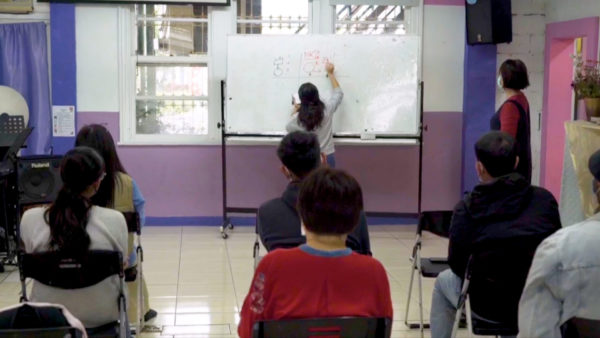
March 2 : Multiple Methods. “We praise the Lord for new teammates who will begin an education initiative through which they can build relationships with women. A new journeyman is currently in language learning, and she will begin a teacher-training program. Two new ‘Hands On’ personnel will be teaching the program of Teachers of English to Speakers of Other Languages (TESOL) to women who have a desire to learn conversational English. Please pray that through this outreach, these teammates will have many opportunities to share about Jesus.”

March 3 : Children Dying Daily. Each year, approximately 90,000 Bihari children die within a month after birth, according to a news report. Many of these deaths are preventable. Please pray for the children of Bihar. Ask that mothers will receive good advice and care while they are pregnant. Pray that deliveries will go smoothly. Pray also that these children will grow to love and worship Jesus as their “One and Only.” BihariBride@pobox.com;

March 4 : Tangible Care Opens Doors. Plans for repairing and rebuilding flood-damaged homes are underway. Access to bricks and masons has been slow. Treacherous road conditions and water damage is limiting the amount of useful bricks for building; also, construction costs have increased. Pray that helping with rebuilding will prove to be an open door for contact and witness. Lift up new contacts that have been made because of the flood. On a recent Sunday, many adults and children attended a Sindhi worship service. They represented seven different locations. The giving of tangible care has opened new doors for witness.

March 5 : Obedience Required. Pray for two new young adult Hindu-background believers attending a weekly Bible study to follow through with their commitments and receive believer’s baptism. “Thank the Lord that 16 South Asian Hindu seekers attended the South Asian Team’s Christmas party (there were 45 people in all). Pray for these folks as we follow up with them. One of the South Asian seekers invited team members for a Christmas lunch at her home!”

Week of February 20, 2011

February 20 : Fun in the Sun. Thank you for praying for the picnic! With money that Vacation Bible School students in Missouri collected, 39 Bihari Muslim children experienced a day of fun away from the noise and pressures of their crowded community. On the bus, they sang their way to the open field where they would eat a good lunch of rice and chicken, play games with a colorful parachute, and hear the story about how Jesus has the power to calm the storm. Please continue praying for these children, many of whom are secret believers. Pray also for the salvation of their Bihari Muslim parents. One Bihari girl is considering baptism. Please pray that she will share this desire with her parents and that they will be supportive and even encouraging regarding her decision to follow Christ. BihariBride@pobox.com;

February 21 : Man of Peace. For the past few months, you have been asked to focus your prayers on the Taga, an unreached people group in North India. This month, please focus on a new group, the Arakh. The Arakh are a Hindu people group who are especially known for their skill in training horses, and they often use horses to pull carts of vegetables from the village to the market. A worker in North India recently discovered a village where the Arakh people lived, and arranged to visit there one Sunday afternoon. A “man of peace” (Luke 10:6) named D welcomed them and was eager to hear about Jesus. The worker shared his personal testimony and the story of Jesus’ coming to earth. Before they left, a crowd of approximately 20 had gathered. Only two of those present had ever heard of Jesus before that day. When they were ready to leave, the worker asked for permission to come back, and D replied, “How shall we learn about this one you call ‘Savior’ if you don’t come back?” This worker has been able to return again and share three more stories from God’s Word and teach them a song, which they really enjoyed. Please pray for the Arakh to be open to the Gospel. Pray that the seeds being planted will bear fruit for eternal life among the Arakh.

February 22 : Kaikolar Need Jesus. Would you expect a people group numbering more than 2 million, who not only have the complete Bible translated into their language but also the “JESUS” film, numerous tracts, radio broadcasts and many other media available in their heart language, to be classified still as “unreached and unengaged” with the Gospel of Jesus Christ? Yet, that is exactly the case for the Kaikolar people of South India. The Kaikolar are the largest unreached unengaged people group (UUPG) in the South Cluster of the South Asian peoples affinity group, with an approximate population of 2,027,000. The majority of Kaikolar people live in southern India between the states of Tamil Nadu and Kerala and work in cotton and textile manufacturing. They are low-caste Hindus who speak Tamil. Please pray fervently for the unreached, unengaged Kaikolar people of South India to hear and respond to the Gospel. Ask the Lord to send Southern Baptists to live and work among the Kaikolar people so they will no longer be a people group destined for an eternity separated from the one true God.

February 23 : Children’s stories. “Mrs. L, how soon can we have another Bible story?” The boy couldn’t wait for the weekly meeting at the home of a member of Team Canada in a large suburb of a major city. Many families in the neighborhood are of South Asian decent and religions, but all the children play together! Some children were curious about what Mrs. L was teaching her children and wanted to hear the stories too. After getting permission from the parents, Mrs. L opened the story time to any interested children. For several weeks, she had eight of her children’s playmates, ages 6 to 11, coming to hear about the various Old Testament prophets and then make crafts. In December, it seemed appropriate to tell about the birth of Jesus. Midway in the story, a boy exclaimed, “This is just like what my father brought home this week. There is a little father, mother and baby, with sheep and shepherds, all in a little house!” (He didn’t know it is called a nativity set.) Please pray for the three families who are touched by this story time, asking the Holy Spirit to open their ears to the Truth. Pray for a relationship of trust between this international couple and the neighborhood parents. Ask the Holy Spirit to guide this couple so “that the message may be given to me when I open my mouth to make known with boldness the mystery of the Gospel” (Ephesians 6:19, HSCB).

February 24 : Calling for Help. On the Arabian Peninsula, not all the people are Arabs; 5 million South Asians are there! Desperate to find better-paying jobs, they have immigrated to the Arabian Peninsula for contracted work. They now have even less of an opportunity to hear the Good News of Jesus than they did in their homelands. Very little work is being done to reach this huge pocket of South Asians. Please ask the Father to provide resources and to call people to reach these 5 million souls living in spiritual darkness. Pray that it may be even as it was when the ascended Jesus sent Paul: “I will rescue you from the people and from the Gentiles, to whom I now send you, to open their eyes that they may turn from darkness to light and from the power of Satan to God, that they may receive forgiveness of sins and a share among those who are sanctified by faith in Me” (Acts 26:17-18, HCSB).

February 25 : Masses Need Jesus. A large urban center is in need of additional cross-cultural workers and strategies for sharing the Good News with the people of the city. With a population of more than 8 million people, there are many opportunities that slip away because of this need for more workers for the harvest. As team leaders consult with other Great Commission Christians in the city, please pray that they will find ways to work together effectively. Ask God to call out more Christians who are willing to plant their lives among the people as witnesses to the power of God for salvation. Pray for the Word of God and the Spirit of God to cover the city in preparation for a mighty movement of God. Pray that the people of this city will respond in faith.

February 26 : Love Your Neighbor. More Muslims live in South Asia than in the entire Middle East, yet they account for less than 15 percent of the total population. They are often despised, not only by Hindus, but also by those who call themselves Christians. Pray that South Asian Christians will obey Jesus’ command given in Mark 12:29-31 (ESV), after one of the scribes had asked, “‘Which commandment is the most important of all?’ Jesus answered, ‘The most important is, “Hear, O Israel: The Lord our God, the Lord is one. And you shall love the Lord your God with all your heart and with all your soul and with all your mind and with all your strength.” The second is this: “You shall love your neighbor as yourself.” There is no other commandment greater than these.’”

FIRST PERSON: A nurse shares physical and spiritual lessons

A nurse shares physical and spiritual lessons

By Bonita Kron*

INDIA ­— Through healthcare teaching in North India, God has given me unique opportunities to share Him. My family works mainly with low caste Hindu people. Although we do occasionally do medical or dental clinics in villages, we often use basic health training to reach out to the people around us.

After the Lord opens up a new area to us, and at least a hand full of people have accepted Jesus, I begin visiting them and teach community transformation lessons. Since villagers are more likely to accept new concepts from fellow villagers, I train believers to carry the lessons to the others in the community. In this way, the believers are being a “light” in their community. They are encouraging better health and wellness in their community, which brings goodwill to the believers, instead of persecution.

These villages are places where children are dying everyday from preventable diseases like diarrhea. We teach lessons on basic germ control (like how to wash your hands effectively), the importance of clean water and nutrition (do not drink the water the buffalo is in) as well as how to prevent and treat common diseases such as Malaria and TB.

We act out skits related to the lesson. Many children come with their mothers, but people of all ages enjoy them. A favorite for all kids is when one person is chosen to be the mosquito that carries Malaria and that person buzzes around the room “biting” (or tagging) random people. This illustrates how the mosquito carries the deadly disease from one sick person to healthy people, transmitting the illness.

Another favorite of children, and parents, is the lesson on how to make an oral rehydration solution (ORS). In the meeting, we demonstrate the preparation and each person practices making this important treatment for dehydration — which can be deadly — by mixing water salt and sugar in the correct amounts.

With each health lesson, we also teach a Bible story. We often act out the Bible stories like we did the Malaria skit. Most Indian people are oral learners, so they love to hear and tell stories.

We train the people who come to the meetings that, like telling about Jesus, the healthcare lessons are not just for them to hear and keep for themselves. All of it should be shared with others. We want them to practice the discipline of telling others with the gospel and with the health lessons. Every time we meet we begin by asking, “How many people did you tell (about Jesus and/or about the health lesson)?” It is amazing and encouraging that every time so many are faithful to this and have shared many times since we last met.

Pray that God would send a master trainer, someone who can carry the teachings on without me and who would ensure follow up in the villages.

—30—

*Name changed.

Bonita Kron is a registered nurse who lives in South Asia with her husband and three kids.

Report in India Blames Attacks on Conversions to Christianity Panel absolves Hindu nationalists in Karnataka state.

By Vishal Arora / Compass Direct News Feb 8, 2011

NEW DELHI, February 8 (Compass Direct News) – Christians in India’s southern state of Karnataka are preparing to file a court petition against a panel that blamed a series of anti-Christian attacks in 2008 on conversions from Hinduism.

In Mangalore, which bore the brunt of Hindu extremist attacks on churches in August-September 2008, Bishop Aloysius Paul D’Souza of the Catholic Diocese said he intended to file a writ in the Karnataka High Court against the Justice B.K. Somashekhara Commission. In its Jan. 28 report on the violence, the commission absolved the state government, ruled by a Hindu nationalist party, of any responsibility in the violence.

Defending the state government and recommending the enactment of an “anti-conversion law,” the commission stated that an allegation of misuse of foreign funds for “mass conversions of innocent and helpless members of the society belonging to weaker sections … is true.”

Dr. Sajan K. George of the Karnataka-based Global Council of Indian Christians called the report “a bundle of lies intended to mislead and confuse the people,” and Dr. John Dayal, a member of the government’s National Integration Council, said it “parroted” Hindu nationalists.

The more than 28 attacks in Karnataka in August-September 2008 were believed to be led by Hindu extremist groups, mainly the Bajrang Dal, close to the ruling Hindu nationalist Bharatiya Janata Party. The violence was seen as fallout of a deadly spate of anti-Christian attacks in eastern Orissa state’s Kandhamal district, which killed about 100 people and burned thousands of houses and churches beginning in August 2008.

George told Compass the final report submitted to Karnataka’s Chief Minister was “completely contrary” to the commission’s interim report submitted last year, which pointed to the culpability of police officials, ruling party leaders and Hindu nationalist groups, including the Sriram Sene and Bajrang Dal.

George said the panel tried to “rewrite the whole story as if dictated by [its political] mentors as per their requirements and convenience.”

Likewise, the Catholic Secular Forum (CSF) released a statement critical of the commission.

“Attacks of such a magnitude are not possible without funds and official support,” according to the CSF.

The panel runs the risk of being labeled as the mouthpiece of Hindu nationalist groups, added the CSF in its statement, signed by CSF General Secretary Joseph Dias, Vice-Chairman of the Maharashtra State Minorities Commission Dr. Abraham Mathai, retired High Court Judge Michael Saldanha, social activist Nafisa Ali and Dayal.

They criticized the report for calling anti-Christian assaults a spontaneous reaction of Hindus “victimized” by conversion attempts, and for denying collusion of the administration. Such accusations, along with baseless allegations of “forced” and “fraudulent” conversions and the demand for anti-conversion legislation, are all typical claims of hard-line Hindu nationalist groups, they said.

Speaking to The Times of India, Walter J. Maben, chairman of the Karnataka Missions Network, recalled that the pretext of the 2008 attacks in Karnataka was a 1987 book translated into the local Kannada language in the late 1990s that allegedly offended Hindus. Attention to alleged distribution of the book by the New Life Church did not come until “several years after its publication, during which period there was no unrest,” Maben told the newspaper. The accusation that the book led to the attacks “was never proven by the commission,” he added.

On Saturday (Jan. 29), Law Minister Veerappa Moily echoed Christians’ demand for a federal probe into the 2008 attacks in Karnataka.

“Just because a commission gave a report, the truth cannot be suppressed,” he told The Times of India.

The CSF statement also pointed out that by “limited exoneration of the Catholic Church” and “blaming other Christian denominations for conversions,” the commission sought to divide the Christian community. “If the attackers were not targeting the Catholic Church, how come it had to bear most of the brunt of the violence?” it asked.

Karnataka, which recorded the highest number of anti-Christian attacks among all Indian states in 2009 and 2010, is now seen as the hotbed of Christian persecution in the country. Of 149 anti-Christian incidents recorded nationally last year, 56 were from Karnataka, according to the Evangelical Fellowship of India. In 2009, Karnataka witnessed at least 48 attacks.

Supreme Court Gaffe
Calling the Karnataka report “the final blow” to the minority community,” Dayal said Christians had the right in recent times to feel “hemmed in from all sides – from the political rulers in Karnataka, Orissa and elsewhere who have made it quite clear that minorities do not matter.”

Dayal, secretary general of the All India Christian Council, also criticized a recent Supreme Court judgment in a case concerning the burning alive of Australian Christian worker Graham Staines and his two sons by radical Hindu nationalist Dara Singh in Orissa in January 1999.

Upholding Singh’s life imprisonment and rejecting prosecutors’ petition for a death sentence, the Jan. 21 judgment raised objections with its statement – apparently referring to non-Hindus – that “It is undisputed that there is no justification for interfering in someone’s belief by way of ‘use of force,’ provocation, conversion and incitement or upon a flawed premise that one religion is better than the other.”

The judgment came under further criticism by Christians and others as it continued, “…Though Graham Staines and his two minor sons were burnt to death while sleeping inside a station wagon at Manoharpur [in Orissa], the intention was to teach a lesson to Graham Staines about his religious activities, namely, converting poor tribals to Christianity.”

Following protests, the court revised the text of the judgment. It changed the first section to, “It is undisputed that there is no justification for interfering in someone’s belief by any means,” and in the second part it deleted the word “conversion” and the reference to “teaching the victim a lesson.”

But the revisions did not wholly assuage Christians.

“The modified version may be less offensive, but it is in no way less dangerous,” said Dayal. “On the face of it, it is satisfactory. But senior Supreme Court advocates have told me there is enough cause to go back to the Supreme Court to seek clarifications on what it means by the term ‘interference’ in someone else’s religion. Is talking about your own religion ‘interference,’ or is evangelization interference?”

Two days after the commission presented its report, the Dalai Lama, Tibetan spiritual leader in exile in India, also criticized religious conversions while condemning the attacks on churches, reported The Deccan Herald. Addressing a gathering in Karnataka’s capital of Bangalore, the Dalai Lama also cited the example of Mongolia, where he said some Buddhists, lured by money, have embraced Christianity.

Christians account for around 2.3 percent of India’s more than 1.2 billion population, which is more than 80 percent Hindu. While the vast majority of Hindus are tolerant of other faiths, a small but powerful minority of extreme Hindu nationalists are believed to be responsible for attacks on minorities.

www.compassdirect.org

–30–

Compass provides reports on Christians worldwide who are persecuted for their faith. Used by permission.

Week of February 13, 2011

February 13 : Christmas Sharing. “Thank you for your prayers during the Christmas season. Believers in Gujarat received many opportunities to share the love of Jesus in the month of December and were overjoyed at the openness of people who were approached. Some outreach was as simple as giving blankets to people who were cold. Others were as involved as inviting the lost to cookie parties and Christmas Eve parties, inviting people from the slums to attend the Christmas service at church, inviting lost friends to a New Year’s celebration at church, caroling in their neighborhoods, and giving baked goods to friends. Every one of these opportunities resulted in the lost hearing the Word. Please continue to pray for those who heard the Good News during Christmas, asking that they will ponder those words and be drawn to Jesus. Pray for believers as we follow up with them and continue to invest our lives in theirs.” http://prayforgujarat.wordpress.com/

February 14 : Sharing God’s Love. For the last few years, Valentine’s Day has brought protests in India from both Muslims and Hindus. Often this comes from a perverted understanding of the holiday. Unfortunately, this holiday is not the only thing identified with Western culture that is misunderstood. Not only do some cultural Christians in India have a diluted or warped understanding of the Gospel (this is true of some Americans as well), but most Muslims have accepted many wrong teachings about our faith. As you gear up to celebrate Valentine’s Day, please pray that the 7 million Muslims in Karnataka will have an opportunity to know God’s love through Jesus. Ask God to confirm to them supernaturally that the Bible is His unchanged Word. Pray that they will begin to understand that Jesus is not only God’s last sacrifice, but He is also God. Pray that on this Valentine’s Day, they will be drawn to the God of love who gave His precious Son for their sins. Intercede for Christians throughout the state. Ask God to help them grow in their knowledge and understanding of the truth. Pray that God will give them favor with both Muslims and Hindus. Ask Him to open doors for the Gospel, and pray that the Christians will share His message boldly.

February 15 : Genuine Seekers. It has been more than two years since you were asked to intercede for two evangelists who travel around their state every two weeks, looking for Deccani Muslims who are open to talking about Jesus Christ. As a result, there are pockets all over the state of seekers – genuinely identified people who are eager to discuss the Gospel. Some of these people have come to Christ, while others are still on that journey. Praise God for the fruit He has brought forth from among the Deccani Muslims over the past two years! Give thanks to God for the two evangelists who keep at it, proclaiming Jesus day in and day out! Thank God for the sacrifices these men have made in loving obedience to Jesus, and thank Him, too, for the support of their families who, with their own share of struggles of various kinds, remain close to Jesus.

February 16 : “How do you become saved…” Please pray for the R family, who are Lohar Muslims. Some of our workers have been good friends with them for a year and have continually been able to pray with the family and share stories from the Word. Recently their son received a government bank job. It is very rare to get placed in a government job without paying some bribes, but their son did it the honest way. Our workers had been praying for him. When he was accepted by the bank, he excitedly came to the workers and thanked them for their prayers. He believes it is because of God and prayers that he got the job he wanted. One evening the workers were able to share with this family about love out of the passage in 1 Corinthians 13. The conversation moved from love to man’s sin. Mrs. R then asked, “How do you become saved from your sins?” The workers shared from Romans 10:9-11 and talked about the meaning of this passage. At this time, the family does not fully understand God’s Word, so please pray that the Spirit will open their hearts and minds to understand everything they have heard, and ask that their hearts will no longer be veiled.

February 17 : White Unto Harvest. On the eastern side of India’s southern tip is the state of Tamil Nadu, India’s seventh most populous state, which is home to more than 63 million people. More than 88 percent of the population worships millions of Hindu gods, whereas only 6 percent are Christians (including Protestants and Catholics). In December, a family arrived in southern India to focus on four of the 503 people groups in Tamil Nadu; however, because of language study, it will be a year before they are able to concentrate on bringing these people the Good News of Jesus Christ. According to national Christian workers in Tamil Nadu, the fields are “white with harvest.” Pray that this one family will not be the only international workers bringing the Gospel to the almost 60 million lost people in Tamil Nadu. Petition for believers to answer God’s call to minister in and send workers to India’s southern state of Tamil Nadu.

February 18 : Clean Water…Spiritual Water. On a remote island prone to natural disasters such as cyclones and tidal surges, many people live without easy access to clean drinking water. Some drink from unclean sources, and others walk long distances to find clean water. The generous giving of Southern Baptists has allowed personnel to provide a small number of tube wells on this island. As a result, almost 1,000 more people now have easy access to clean drinking water. Pray that the many who receive water yet continue to thirst will soon find the source of living water and never thirst again.

February 19 : Cricket World Cup. Sri Lanka will be one of the hosts of the 10th Cricket World Cup, beginning February 19 in Dhaka, Bangladesh, and culminating with the finals on April 2 in Mumbai, India. The World Cup has gained momentum through the years, with the first being held in 1975 in England, with eight teams participating. This year, 14 teams will be battling it out for the coveted cup in approximately 12 different arenas. There will be two venues in Sri Lanka, one in the capital city and one farther south. Pray for the church to rise to the occasion! Pray for believers to be trained in sharing their faith, and petition for boldness to do that among those who will be attending these events. Pray for a mighty outpouring of God’s Spirit to provide opportunities, protection, and a harvest of souls! 

Week of February 6, 2011

February 6 : DHAKA, BANGLADESH. “As I read Isaiah 58, I can’t help but notice that the people the Israelites are exhorted to serve sound a lot like the people we see on a daily basis. We see the hungry, the homeless, the naked and the oppressed each time we walk out our door. They lie in the streets, tap on our van windows begging for money, and often reside in slums where disease abounds. Clean water is not readily available, and there may be one toilet for thousands of people to share. In February, cross cultural workers and like-minded nationals will be trained in how to use simple health teaching to enter and help communities. We will learn how to help families be healthier and, we hope, have an opportunity to share the love of Christ with them. Pray that God will call out those who should be at the training. Ask Him to open our minds and hearts to learn and to give us a vision for how to apply this training in Dhaka. Pray that God will work through us, as in Isaiah 58:8 and 10: ‘Then your light will break forth like the dawn, and your healing will quickly appear; then your righteousness will go before you, and the glory of the LORD will be your rear guard. . . . then your light will rise in the darkness, and your night will become like the noonday.’”

February 7 : Upcoming Graduation. Pray for the graduation this month of the twelfth class of nursing students. These young women are now fully qualified nurses and will be working at the Bangalore Baptist Hospital for at least one year. Some of them are new followers of Jesus. Pray that all of these young women will mature to become Christian professional women who give excellent physical and spiritual care to their patients.

February 8 : Vasant Panchami. “The fear of the Lord is the beginning of wisdom, and the knowledge of the Holy One is understanding” (Proverbs 9:10, HCSB). As you pray today, Hindus in South Asia are celebrating Vasant Panchami to welcome the first day of spring. Also known as Saraswati day, it honors the Hindu goddess of knowledge, music and the arts. Traditionally, children are taught to write their first words on this day, as an auspicious beginning to their education. Most educational institutions will have special prayers for Saraswati. Pencils, notebooks and pens are placed at the feet of the idol for blessings and then used by the students. Musicians will have special “pujas” (worship rituals) performed for their instruments. The goddess is considered to be the personification of all knowledge. Please pray that students, musicians and artists will realize that the idol has no power to help them. Pray Colossians 2:2-3 for South Asia’s Hindus today: “Omniscient God, we want their hearts to be directed to You so that they may have all the riches of assured understanding, and have the knowledge of Your mystery – Jesus Christ. May they discover all the treasures of wisdom and knowledge that are hidden in Him.”

February 9 : Secret Believers. He went to the village to meet with some of the believers there. The national partner who was hosting him took him to a house to sit and visit. The mother, father and one son were present. The talk was of surface things. Upon leaving, the worker wondered why they had gone to that particular house. It was then that the national believer told the worker that the mother and one son are secret believers and he likes to go there to check on them every once in awhile. There are many in this state who are secret believers because they fear the persecution that may result from them openly following Christ. Please pray for these secret believers to be bold in sharing with their families and to continue to cling to the cross no matter what may result. Please also pray for their families to come to saving faith in Christ.

February 10 : Language Immersion. Thank you for your continued prayers for our worker who will begin a language immersion this month. Please pray for favor with host families and the local community. Ask the Father to provide many relationships with native speakers for practice as well as sharing the message. Also pray that the language teacher will be able to prepare for classes and challenge the student to learn new grammatical structures and better ways to communicate. Thank you, as well, for your prayers for F. She recently contacted our workers. She did not share much – only that she really struggled while everyone was away, especially in her former job. Please ask God to encourage her and give her clear direction about her future. Ask Him to heal any hurts that have taken root in her heart over the years.

February 11 : Partnering to Reach Others. This month, D is going to be training and partnering with an established church in Andhra Pradesh, India, in order for this church to adopt an unengaged unreached people group (UUPG). Pray for D to have wisdom and favor as he works with this church. First, ask the Holy Spirit to direct the church to the particular UUPG He would have them focus upon, and pray that they will really be able to impact this UUPG because of God’s unique gifts to their own church body and the particular history and needs of the group among whom they are choosing to work. Second, pray that the Lord will use the words that D shares to instruct and motivate the hearts of the members of this church. Pray that they will have a good understanding of the task and that they will have unity, as a church, in seeking to reach these people. Finally, pray that this training will not fall on dull ears, but that the vision that God puts in the hearts of the members will grow stronger as time passes.

February 12 : Free Gift for All. Thank you for praying as a movie about the life of Jesus was shown on local television during the holidays. So far, 30 people have made a request for the free gift of a New Testament. Thank the Lord for those who responded to this offer! Continue to pray for the follow-up that is being carried out since the Christmas showing of the “JESUS” film. The movie was shown three times on local television, reaching into hundreds of homes. Pray for believers who will be delivering New Testaments to all who requested this free gift. Ask God to draw each person to read the Word and discover the true gift of Jesus Christ. 

Touching the Untouchables: Volunteers minister to India’s lower caste

By Tess Rivers*

Tess Rivers reunited with her friend, Zulema, who had lost her son last year because of the poor medical care available in the villages. The only way they could communicate was through tears and touch.

INDIA–Multiple sets of dark eyes peered from the shadows of the small, colorful concrete homes lining the narrow dirt path. The team of Americans smiled and nodded as they passed the darkened doors, keeping one eye on the ground as they stepped gingerly over the occasional pile of animal dung. Flies swarmed, goats munched and cows lay peacefully just outside the front doors, as if the homes they guarded belonged to them.

“The Dalits live on this side of the road,” explained Devadas Kumble*, an Indian pastor who coordinated the American volunteer mission team’s activities. “Higher castes live on the other side of the road.”

From where they stood, the volunteers saw little difference between the two sides of the village. On both sides, the roads were unpaved, the homes were modest and the livestock roamed freely. To the Dalits, however, the invisible line separating them from the higher castes was as impregnable as a castle wall.

The Dalits are India’s “untouchables.” Numbering more than 16 million people, they are the most marginalized members of Indian society, a caste so low they are not even included as one of the four defined by Hindu tradition.

The team of Americans knew little about the difficulties suffered by those they greeted as they walked the narrow path of this village. Not bound by centuries of caste division and cultural expectations, the team came simply to offer free medical and dental care to people from any caste. In fact, at the end of one long day, a high-caste village official stopped the van of volunteers. The official asked why the team was only offering the clinics to the Dalits.

“I told him that the clinics were for both high- and low-caste people and invited him to come,” Kumble said. “But he didn’t want to take medicines along with low-caste people.”

LOW-CASTE SYSTEM

Much like the days of segregation in the pre-Civil Rights South, Indian cultural norms divide the Dalits from the high castes. In this village, as in many others, the Dalits are confined to one section and are not allowed to mingle with the high castes for fear of contaminating them.

With a parade and drums, the villagers welcomed the medical team. The team conducted its clinic in a small Baptist church in the Dalit section of the village. Many interested faces greeted them.

“One of our church members is essentially being treated as a slave by some of the high-caste members of his village,” Priya Kumble,* the pastor’s wife, said. “They make him do odd jobs for them, but they don’t allow him into their homes.”

A 2010 study by Amnesty International cites more extreme examples of discrimination and violence, including the case of four Dalits who died of starvation in 2009 after the dominant landholding castes denied them access to food and water. Also in 2009, 300 people were left homeless after an intentional fire destroyed 74 Dalit homes.

In a country where, according to India’s National Crime Records Bureau, more than 90 Dalits are victims of crime every day, the higher-caste Kumbles work to resist violence and discrimination against the untouchables. At the churches the couple starts, they battle against longstanding prejudices by encouraging the Dalits and high castes to worship side-by-side.

While the Kumbles are concerned about the inequalities inherent within India’s centuries-old caste system, the volunteer team members, like most Americans, were baffled by it.

“Can’t they simply move somewhere else and tell people they are a different caste?” asked volunteer Debbie Williams, who attends Faith Promise Church in Knoxville, Tenn.

The Kumbles explained that even if better opportunities were available, most Dalits are ill equipped to escape the cycle of illiteracy, poverty and injustice that have characterized their lives for centuries. Amnesty International reports that Dalits have difficulty accessing health, education and legal services due to physical attacks, discrimination and social boycotting by higher castes. The Kumbles’ ministry works to improve the standard of living among the Dalits, conducting literacy classes and health-awareness programs in rural villages. They hope their efforts promote equality among the castes while showing God’s love is for everyone.

Before pulling his tooth, Dr.Tim Williams, a dentist from Knoxville, Tenn., put a young boy at ease.

TOUCHING THE UNTOUCHABLES

While the team’s medical work among the Dalits appalled some high-caste people like the village official, others applauded it. High-caste congressional representatives and local police attended a clinic at the Kumbles’ home. Some simply observed, while others received medical treatment. Regardless of caste, the team greeted each patient with a smile and a gentle touch.

Ginger Wallace, a music assistant from Wallace Memorial Baptist Church in Knoxville, Tenn., assisted in the dental clinic and noticed a visible reaction from the untouchable women as she led them by the hand to their place in line.

“Every woman wanted her friends to see that I was touching her,” Wallace said.

In a society where untouchables must drink water from their hands rather than defile the glass or cup for anyone else, Wallace’s touch was significant in more ways than one.

One notable example involved Aditya Attimarad,* a high-caste Hindu man whom Kumble had hired to drive the team of volunteers. Initially, Attimarad kept his head bent, rarely smiled and spoke little as he drove to and from villages. After one of the clinics, Harshal Banagar,* a young Indian Bible student who assisted in the clinics, scooted in close to Attimarad in the front seat of the van and shared the Gospel. Attimarad listened closely as he drove the team. Once the van arrived at the hotel, Wallace and Susan Martin, a behavior specialist who is a member of Wallace Memorial, noticed Attimarad’s demeanor was dramatically different. He smiled. He waved goodnight.

“Sweet dreams!” Attimarad called out.

Two days later at the conclusion of the last clinic, the team gathered in a circle with the Indian pastors and all who assisted in the clinics throughout the week. For the first time, Attimarad joined the group. They prayed and thanked Jesus for the privilege of serving together. They sang a song of blessing. They held hands.

From the first patient to the last, Dr. Black Crabtree offered dignity and respect in his handshake.

The next day, Attimarad called Kumble aside.

“I want to be a follower of Jesus,” Attimarad said. “That team loved all the people, and they touched all the people, even the untouchables.”

“He saw something different in us, and he wanted it!” Wallace said.

It was a touch that made the difference.

–30–

*Name changed.

Tess Rivers is a writer for the International Mission Board living in Southeast Asia.